_w=1366_h=908_pjpg.jpg?v=202405071552)
Why Visit Sicily?

Sicily has a way of drawing you in from the moment you arrive, an island shaped by sunlight, dramatic landscapes and the many cultures that have passed through it over thousands of years. That sense of place builds as you explore, whether you’re walking through baroque streets lined with cafés and small shops, stepping into a cool church during the hottest part of the day, or stopping at a local bar for a granita. As you travel around the island, the scenery shifts between coastal views, fields of olives, citrus groves and small towns set on gentle hillsides. The scale of Etna becomes clear as soon as it appears on the skyline, a reminder of how strongly nature shapes this part of Italy.
Along the coast, daily life is very straightforward, and much of it revolves around the sea. Visitors can expect long swims in clear water, lunches of grilled fish or pasta with clams, and time spent on beaches that vary from long sandy stretches to small rocky coves. Fishing boats come and go throughout the day, and local markets offer everything from fresh seafood to vegetables grown just inland. Many coastal towns are easy to explore on foot, with plenty of places to eat, shop and spend time without needing to plan too much.
Inland, towns are smaller and quieter but just as rewarding to visit. Narrow streets lead to central piazzas where locals meet, and many trattorias are family‑run, serving dishes based on local ingredients such as ricotta, pistachios and seasonal vegetables. It’s the kind of area where you can stop for a pastry, visit a small bakery or shop, and get a sense of everyday Sicilian life without having to go far. Combined, these coastal and inland experiences make the island feel varied, practical to explore and full of places worth stopping for.
As our villa specialist, Daphne Forte says, “Sicily is a fascinating destination rich in history with a plethora of archaeological sites and temples. There are beautiful coastal villages to visit where you can sample some of the best and most varied seafood dishes.”
To explore Sicily in more detail, including the best time to visit, getting to Sicily, cultural highlights, beaches, food, culture and places to stay, explore our Guide to Sicily and plan an island stay that suits you.
When is the Best Time to Visit Sicily?

Sun‑soaked Sicily has a reliable Mediterranean climate and works well for villa holidays throughout the year. Summers are long, hot and dry, while winters stay relatively mild compared to many other European destinations. Spring and autumn offer comfortable temperatures, but the island is at its most energetic in high summer.
Late autumn is considered low season. Temperatures are cooler but still mild by European standards, typically ranging from 10–14°C in winter. Rain is more common from late October into January. This period works well for visitors who want a quieter trip focused on food, wine tasting and exploring towns without the peak‑season crowds. Landscapes remain attractive, but extra layers are needed for inland areas.
Spring brings warming temperatures, rising to around 18–24°C by May. It’s one of the best seasons for sightseeing and walking, with wildflowers and greener landscapes inland. As Responsible Travel points out, May also hosts Noto’s Infiorata Flower Festival, when Via Corrado Nicolaci is decorated with elaborate flower‑petal artworks. In 2026, the festival runs 15–19 May, accompanied by parades, exhibitions and cultural events, one of Sicily’s standout spring experiences.
Summer is peak season, with coastal temperatures frequently exceeding 30°C and sea conditions perfect for swimming. Towns, beaches and archaeological sites are busiest now, and prices reflect demand. As Responsible Travel says, Taormina’s Greek Theatre hosts its main programme of concerts, opera and performances from mid‑June through September, creating one of the island’s most atmospheric cultural settings. Roads and beaches are especially busy around the Ferragosto holiday on 15 August. This is the period to choose if you want lively resorts, warm late evenings and the most predictable beach weather.
September and October are often considered ideal by many travellers: warm seas, temperatures that are still high but more comfortable for activities, and fewer crowds. September remains excellent for diving and water activities, while October suits walking and sightseeing.
Getting to Sicily & Getting Around
Reaching Sicily is straightforward, with multiple flight, ferry and rail options depending on how you prefer to travel. Most visitors arrive by air, and the island has four airports. The two major international gateways are:
- Catania–Fontanarossa (CTA) – Sicily’s busiest and largest airport, ideal for accessing the east of the island, including Catania, Taormina and Syracuse.
- Palermo–Falcone Borsellino (PMO) – the main airport for western Sicily, located around 35 km from Palermo and well connected to major Italian and European cities.
Direct flights operate to Sicily from across Europe, including the UK, as Skyscanner states, typical flight times of around 3 to 3.5 hours from London. Italy also maintains frequent year‑round domestic links between Sicily and cities such as Rome, Milan, Bologna and Naples, making it easy to include the island in a wider Italian itinerary
Sicily is connected to the Italian mainland by regular trains that continue onto the island by boarding ferries across the Strait of Messina, a unique and scenic way to arrive. Services run from major hubs such as Rome and Naples toward Messina, Catania and Palermo.
It is even possible to travel all the way from the UK to Sicily by train, using Eurostar to Paris or Brussels, continuing through Italy, and finally taking the ferry‑boarding trains into Sicily. This route is well documented by Rome2Rio and other independent rail planners, and while it takes considerably longer than flying, it remains an appealing option for low‑impact travel.
For travellers interested in reducing carbon footprint, you can read more on our Positive Impact page.
Car Hire
For most visitors, especially those staying in villas, hiring a car is the most flexible and convenient way to explore Sicily. Public transport works well for major cities and some coastal routes, but a car makes it far easier to visit beaches, hill towns and quieter rural areas at your own pace. We recommend arranging your vehicle in advance so it’s ready on arrival. Cars can be collected directly at both Catania and Palermo airports, as well as in larger towns across the island, allowing for a smooth and efficient start to your holiday. Roads are generally straightforward, distances between key destinations are manageable, and driving gives you the freedom to create an itinerary that suits you.
Culture & History in Sicily

Sicily is an island with an impressive past. Invaded, conquered and reshaped over millennia, it has absorbed influences from Greeks, Romans, Arabs, Normans and Spaniards, while natural events like earthquakes and eruptions have left further marks on its landscape and culture. The result is an island where history is visible almost everywhere you turn, in its theatres and temples, its mosaics, its baroque town centres and the rural sites scattered across the countryside. According to Insight Vacations, this layering of cultures is one of the defining characteristics of Sicily’s identity, and it remains one of the island’s greatest draws for visitors seeking depth alongside scenery.
Nowhere captures this blend of history and living tradition quite like Agrigento during the Almond Blossom Festival, held each year between late February and mid‑March when the almond trees burst into white and pink bloom. The event has been celebrated for more than a century and marks the arrival of spring in the Valley of the Temples, where ancient Greek ruins form the backdrop for floral parades, traditional music, folk performances and culinary events.
If you feel like switching up your villa time for a day of exploring, some of Sicily’s most significant ancient sites are easily reached by road. The ancient Greeks left behind some of the island’s most recognisable landmarks: the Greek theatre in Siracusa, the ruins at Heraclea Minoa, and the remarkable temples at Segesta and Selinunte. The Valley of the Temples, just south of Agrigento, is the best‑preserved Greek site on the island, once forming the heart of the ancient city of Akragas. Even a short visit gives you a clear sense of its scale — the temples of Concordia, Juno and Hercules are the most intact and offer the strongest glimpse into Sicily’s classical past.
Roman history is equally well represented. Piazza Armerina is home to Villa del Casale, famous for its extensive and intricate mosaics, considered among the most important in Italy’s ancient heritage. If you’re staying in the west, the small Roman burial chamber of Crispia Salvia in Marsala is another interesting site, especially for travellers who enjoy quieter, less‑visited locations.
The island’s southeastern corner is known for its Sicilian Baroque towns, a response to the devastating 1693 earthquake that destroyed much of the Val di Noto region. Places like Ragusa, Modica and Noto were rebuilt in a distinctive, ornate style that today is UNESCO‑protected. These towns combine grand façades and elegant palazzi with narrow lanes, sun‑bleached shutters and atmospheric hillside settings, offering some of the most appealing townscapes in Sicily. Their mix of history, architecture and everyday life makes them ideal for unhurried wandering between cafés, churches and viewpoints.
Best Beaches to Visit in Sicily

Private pool villa or not, many visitors find themselves drawn to Sicily’s coastline. During the long summer, beaches fill with both locals and holidaymakers, and the island’s varied shoreline means there’s a stretch of coast for every kind of beach day. From broad sandy bays to rocky coves and protected nature reserves, the choice is wide and many of our villas sit within easy reach of Sicily’s best beaches.
While many Sicilian beaches are naturally pebbly, there are plenty of sandy options too. On the southeast coast, the Vendicari Nature Reserve offers some of the island’s most untouched shoreline, with quiet, wide beaches and clear shallows ideal for relaxed days away from crowds. It’s a great match for guests staying in our villas around Noto, Modica and the Val di Noto.
If your villa is in the north, both San Vito lo Capo and Mondello are within comfortable driving distance. San Vito lo Capo is known for its bright, soft sand and sweeping bay, while Mondello pairs a long sandy beach with excellent seafood restaurants and a lively seafront atmosphere.
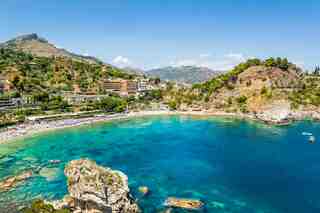
Along the east coast, the standout is Isola Bella, the cove beneath Taormina. Its translucent Ionian water makes it one of the best snorkelling spots on the island. It can be rocky, so water shoes are handy, and hiring a lounger is common. Guests staying near Taormina or Giardini Naxos will find it particularly easy to reach.
On the west coast, the dramatic Scala dei Turchi offers a completely different setting: a white limestone formation overlooking a golden strip of beach. Private beach clubs and public areas sit side by side, giving you flexibility depending on the kind of day you want.
With villas positioned across these regions, it’s simple to plan beach days that suit your style — whether that’s a quiet nature reserve, a lively town beach or a scenic cove paired with lunch by the sea.
Food & Drink in Sicily

The food and drink scene in Sicily is unmistakably Italian, but with its own character shaped by centuries of cultural influence. Meals are an essential part of daily life, and the island’s dishes reflect an agricultural tradition built on simple ingredients, strong flavours and recipes passed down through generations. Expect to drink local wines such as Nero d’Avola, Frappato, Grillo or Moscato, each grown in conditions shaped by Sicily’s soils and microclimates. Much of the cuisine draws on the island’s layered history, with Greek, Arab, Norman and Spanish influences all make their way into everyday cooking, giving Sicilian food a depth and variety that stands out even in a country famous for its cuisine.
Eating out, you’ll notice that most menus focus on island-grown produce. Seafood is central: swordfish, sardines, prawns, clams and octopus often take pride of place. Sicily’s southern location means citrus, tomatoes and vegetables ripen early and intensely, while nuts like pistachios and almonds appear in everything from pasta to pastries. Beans and pulses remain at the heart of many traditional dishes, a legacy of both practicality and heritage.
One of the most enjoyable ways to experience local food is by visiting Sicily’s open-air markets, where you can stock up your villa kitchen or graze on street snacks as you go. Larger towns host markets most days, while smaller villages usually have fixed weekly market days. In Palermo, Vucciria and Ballarò are among the best known. They’re busy, colourful and packed with produce, piles of fruit and vegetables, baskets of herbs and spices, and plenty of fresh fish brought in that morning. Local street foods vary, but you might come across specialities such as octopus salads, panelle, arancini or beef-and-cheese-filled rolls.
For anyone with a sweet tooth, Sicily excels. Cannoli originated here, and the island has a strong claim to being an early home of Italian gelato, meaning high-quality ice cream is easy to find. Pastries often feature ricotta, almonds, citrus or pistachio, flavours deeply rooted in local agriculture.
Where to Stay: Our Villas in Sicily

Our Sicily villas are thoughtfully spread across three distinct regions, giving you the freedom to shape the holiday you want. Choose Selinunte and Western Sicily for wide-open landscapes, coastal archaeology and a blend of European and North African influences. Opt for Siracusa and Southern Sicily for baroque towns, quiet bays and outstanding food. Or stay in Taormina and Eastern Sicily, a favourite for beaches, nightlife and easy access to Etna.
Here are a few suggestions to inspire your search:
- Villa Inzolia – In the heart of Sicily’s wine country, this stylish villa is just 200m from a superb restaurant and is within easy reach of beaches and has open views over sun-soaked vineyards to the sea
- Palazzina del Mare – Palazzina del Mare is a sleek modern villa in an ideal location, just a short walk from nearby shops and restaurants, and a golden beach.
- Stella di Mare - Stella di Mare is a modern waterside villa located on the edge of the seaside village of Stazzo. This property boasts a very large private pool, excellent outdoor living spaces and is beautifully furnished.
To find out more about Sicily, make sure to speak with one of our Villa Specialists or make an enquiry today.
 Chat on Whatsapp