_w=1366_h=910_pjpg.jpg?v=202405071552)
Why Visit the Côte D’Azur?

Sun, sea, palm trees, and a coastline that shifts between busy promenades and quieter stretches. As you move along the Riviera, each town has its own pace, some more polished, others a bit more relaxed and lived in. It’s an easy place to spend time, whether you’re there for the beaches, the food, or just to switch off.
A swim in the morning, a long lunch somewhere by the water, then a walk through a market or along the harbour later on. From Saint-Tropez to Cannes, there’s no shortage of places to stop for seafood or a drink. You don’t need much of an itinerary, most towns are compact, and it’s easy to fill a day without trying too hard.
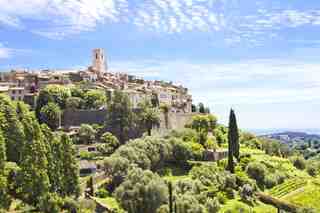
Head inland and things slow down. Hilltop villages are quieter, with small squares, stone houses and simple restaurants serving whatever’s in season. It’s worth making the time, these places feel more rooted in everyday life, away from the busier coastline.
As our villa specialist, Nuria Chatelus, says, “The Mediterranean climate, combined with the azure waters, makes it perfect for sunbathing, yachting, and exploring picturesque towns.” It’s a place that’s easy to settle into, whether you’re staying by the coast or heading further inland.
If you’re looking for when to visit, how to get around, the best beaches, places to eat and where to stay, our Guide to the Côte d’Azur covers it all and helps you plan a trip in a way that suits you.
Best Time to Visit the Côte d’Azur

The Côte d’Azur has a reliable Mediterranean climate and works well for villa holidays throughout the year. This sunny southern stretch is an easy choice in any season, with long, hot summers and winters that are greyer and sometimes wet, but still relatively mild compared to much of Europe. Spring and early autumn tend to offer the most comfortable conditions, though the coast is at its busiest in peak summer.
Winter is considered low season. Temperatures are usually mild, often ranging between 8–14°C, but the weather can be more changeable, with rain more likely between November and February. It’s a quieter time to visit, suited to slower trips focused on food, galleries and exploring towns without the crowds. Coastal areas stay active, though some beach clubs and seasonal restaurants close.
Spring brings warmer, more settled weather, with temperatures rising to around 16–22°C by May. It’s one of the best times to explore on foot, with fewer visitors and lower prices than summer. The countryside begins to look its best, with flowers, trees and vineyards coming into bloom, and towns feel lively without being overcrowded.
Summer, from late June through early September, is peak season. Temperatures regularly exceed 30°C, with heat and humidity at their highest. Beaches are often packed, restaurants busy, and coastal roads slow‑moving, especially in August. Prices also peak during this period, both for accommodation and dining. This is the time to visit if you want long evenings, a lively atmosphere and consistently hot, sunny weather.
September and early October are often seen as the best balance. The sea stays warm after summer, temperatures ease slightly, and the crowds begin to thin out. It’s a good time for combining beach days with exploring inland, with a more relaxed pace across the region. Responsible Travel, who note that the best time to visit Provence and the Riviera is “unquestionably either April to May, or September to October,” when the weather is pleasant and the region is far less crowded than in high summer.
Getting to Côte d’Azur
Reaching the Côte d’Azur is simple thanks to excellent air, rail and road connections. Most visitors arrive via Nice Côte d’Azur Airport, the region’s main international hub and the busiest airport in France outside Paris, located conveniently on the seafront just southwest of Nice. The area is also served by Cannes Mandelieu Airport and Saint‑Tropez Airport, both of which cater largely to private and regional aviation.
Rail travel is another straightforward option. France’s TGV high‑speed trains link Paris to Nice in just under six hours, with major Riviera stations, including Nice, Cannes, Antibes, Toulon and Monaco, receiving both national and international services from cities such as London, Brussels, Amsterdam and Barcelona. Once on the coast, frequent TER regional trains run between Cannes and the Italian border, offering a scenic and efficient way to explore. Travelling by train also provides a lower‑impact alternative to driving, and for guests wishing to make more mindful choices, our Positive Impact initiative outlines ways to travel more responsibly.
Car Hire
Hiring a car is often the most flexible way to explore the Côte d’Azur, especially for villa stays where guests want the freedom to reach quieter beaches, hilltop villages and rural viewpoints at their own pace. Public transport works well between major towns, but driving allows you to build an itinerary that suits you, particularly useful for families or travellers planning inland day trips.
Roads across the region are generally well maintained, and distances between key destinations are short, making local journeys straightforward. As with many popular Mediterranean destinations, it’s recommended to arrange car hire in advance, particularly during busier months, to secure availability and ensure a smooth start to your holiday. We offer our own car hire and transfer services, allowing guests to pre‑book transport ahead of arrival.
Culture & History in the Côte d’Azur

The Côte d’Azur has a long and varied history shaped by millennia of settlement, trade and cultural exchange. Long before the glamour of modern tourism, this Mediterranean coastline was home to ancient Ligurian communities, followed by Greek colonists who founded early trading posts such as Antipolis (Antibes) and Nikaia (Nice) in the 6th–4th centuries BCE. The Romans later expanded these towns, building roads, fortifications and amphitheatres, including the remains still visible at Cimiez in Nice. Over the centuries that followed, medieval hilltop villages such as Èze and Saint‑Paul‑de‑Vence grew as fortified communities perched high above the coast.
By the 18th and 19th centuries, the region’s mild winter climate began attracting aristocratic travellers from across Europe, transforming the Riviera into one of the continent’s earliest resort destinations. The arrival of the railway in the mid‑19th century accelerated this shift, establishing the Côte d’Azur as a meeting point for royalty, writers, artists and later the international jet set. Today, this layering of ancient and modern influences is one of the defining characteristics of the French Riviera, where centuries of history sit quietly beneath its glamorous contemporary image.
If you feel like stepping away from villa life for a day of exploring, the region offers a rich cultural landscape. Antibes is one of the Riviera’s most characterful old towns a stroll-friendly maze with deep artistic roots. Picasso lived and worked here in 1946, using the old town hall as his studio, while nearby Juan‑les‑Pins was once home to novelist F. Scott Fitzgerald in the 1920s. Its famed Cap d’Antibes peninsula, lined with grand villas and the iconic Hotel du Cap‑Eden‑Roc, remains one of the most scenic coastal drives on the Mediterranean.
Nice combines shutter-clad townhouses, grand baroque churches and a colourful old quarter full of cafés, markets and restaurants. Its famous seafront promenade sweeps the curve of the Baie des Anges, linking the old town with elegant Belle Époque buildings. Driving east from Nice towards Monaco takes you through some of the Riviera’s most picturesque villages. Èze, perched on a precipitous peak, is a tiny 900‑year‑old settlement of stone alleys, galleries and panoramic views.
Inland, the Mercantour National Park offers alpine-meets-Mediterranean scenery, home to the Vallée des Merveilles, where over 40,000 prehistoric rock carvings are etched into the mountainsides. Further west, the hill town of Grasse, widely regarded as the world’s perfume capital - is surrounded by lavender fields and scented hillsides. Many of its historic perfumeries, including Fragonard and Molinard, offer free guided tours, while workshops at the long‑established La Galimard allow visitors to create their own bespoke fragrance.
The region’s cultural calendar is equally rich. Most iconic is the Cannes Film Festival, held each May, when the Croisette transforms into a global centre of cinema. While the official screenings are reserved for industry professionals, the atmosphere sweeps across the city, with open‑air showings, glamorous arrivals and a palpable sense of excitement that makes Cannes buzz in a way few places can match.
Côte d’Azur Beaches Worth Your Time

The Côte d’Azur’s shoreline is one of its greatest draws, an ever‑changing ribbon of sandy bays, rugged headlands and clear Mediterranean shallows. From elegant promenades to secluded natural hides, the region offers beaches that suit every kind of trip, whether you’re seeking glamour, seclusion or family‑friendly simplicity.
Along the Bay of Cannes, you’ll find some of the Riviera’s most iconic stretches of sand. This coastline blends classic French seaside charm with easy access to beach clubs, waterfront restaurants and postcard‑worthy views. The area is also home to Juan‑les‑Pins, one of the Riviera’s most famous sandy beaches, known for its lively atmosphere, soft shoreline and warm, shallow waters that make it a perennial favourite for long, lazy days by the sea.
Across the coast, the Bay of Saint‑Tropez offers an entirely different mood, where stylish beach clubs meet peaceful coves backed by pine forests. Some of the region’s most celebrated beaches sit here, including peaceful stretches around Ramatuelle and nature‑framed bays known for their pale sand and turquoise water. Among the area’s standout beaches is Plage Notre‑Dame, on the nearby island of Porquerolles, often listed among the most beautiful in the Côte d’Azur thanks to its sweeping, pine‑backed shoreline and clear, calm sea.
For something more intimate, Paloma Beach on Saint‑Jean‑Cap‑Ferrat remains one of the Riviera’s most elegant coves. Once frequented by the Picasso family, it’s known for its crystalline water, dramatic views across Beaulieu‑sur‑Mer and an atmosphere that balances understated elegance with natural beauty.
Beyond these well‑known locations, the Côte d’Azur is dotted with hidden bays and scenic viewpoints, from the dramatic red‑rock-backed beaches of Théoule‑sur‑Mer to the sheltered pebbled coves around Beaulieu and Cap‑d’Ail.
For guests who want to enjoy the region’s coastline right on their doorstep, our Côte d’Azur beach villa collection includes properties in both the Bay of Cannes and the Bay of Saint‑Tropez, offering immediate access to some of the Riviera’s best-loved beaches and the freedom to explore them at your own pace.
Food & Drink in Côte d’Azur

Just like the rest of France, the Côte d’Azur has a serious food and wine culture, shaped by its Mediterranean climate and coastal way of life. Olive oil, fresh vegetables, seafood straight from the harbour, fragrant herbs and simple, honest flavours are at the heart of Riviera cuisine. Local markets are an essential part of this culture. Cannes, Nice and Antibes all have excellent covered markets where stalls brim with sun-ripened produce, cured meats, cheeses and just‑caught fish. They’re also perfect for a slow morning spent browsing, chatting and sampling, before settling into a pavement café for a warming café crème and a buttery pastry.
When you don’t feel like cooking in your villa, do as the locals do and head out for an easy, flavour‑packed evening. In Nice’s Old Town, Cours Saleya is the go‑to spot for casual dining, known for its classic Niçoise specialities - crisp salade niçoise, caramelised pissaladière, and socca, the beloved chickpea pancake cooked over an open fire. It’s also atmospheric well before dinner, with cafés and terraces filling for the timeless ritual of an early evening apéritif. Whether it’s a chilled Aperol Spritz or a punchy pastis, it’s the perfect way to start an evening on the Riviera, especially on a warm summer night.
If you’re celebrating a special occasion, the Côte d’Azur’s fine‑dining credentials are exceptional. The region is home to romantic hilltop restaurants and long‑established brasseries, as well as some of the most acclaimed Michelin‑starred dining rooms in France. Near Grasse, the pretty village of Cabris offers a memorable setting for a sophisticated night out, while further along the coast, Le Louis XV – Alain Ducasse in Monaco’s Hotel de Paris remains one of the Riviera’s most iconic gastronomic experiences. Equally exceptional is Mirazur in Menton, a three‑star restaurant renowned for its innovative, produce-led menus and sweeping Mediterranean views.
Sweet treats are a way of life here too. Patisseries, boulangeries and Italian-inspired gelaterias fill the towns and villages near our villas, offering everything from delicate fruit tarts and glossy éclairs to rich gelato in classic and creative flavours. Cannes is known for its elegant macaron shops, while Saint‑Tropez is famous for the indulgent Tarte Tropézienne, a brioche cake filled with silky cream, created in the 1950s and beloved ever since. If you're staying in one of our villas near Saint‑Tropez, it’s an absolute must‑try.
Where to Stay: Our Villas in the Côte D’Azur
Our Côte d’Azur villas are set across two of the region’s most desirable stretches of coastline. In the Bay of Saint‑Tropez, properties sit close to relaxed coastal towns like Sainte‑Maxime and Bormes‑les‑Mimosas, offering easy beach days and a quieter take on Riviera living. Meanwhile, the Bay of Cannes places you near the area’s most iconic scenery, with glamorous seafronts, shimmering blue bays and effortless access to Cannes’ restaurants, boutiques and beaches.
Whether you’re dreaming of low‑key coastal days or classic French Riviera sparkle, both bays provide an inspiring base for exploring this beautiful stretch of Mediterranean coast.
Here are a few suggestions to inspire your search:
- Villa D'Azur – Standing elegantly on the waterfront in La Seyne-sur-Mer, this prestigious property boasts five suites, a home cinema, magnificent infinity pool and glorious sea views.
- Mas Cicadas – Surrounded by olive trees and drenched in Provençal charm, this 19th-century three-bedroom villa near Cannes boasts a lovely pool area, fragrant gardens, and effortless access to Riviera towns.
- Villa Cabris - Offering breathtaking views and a large private pool, this charming property is set close to the shimmering Bay of Cannes.
To find out more about the Côte d’Azur, make sure to speak with one of our Villa Specialists or make an enquiry today.
 Chat on Whatsapp