_w=1366_h=904_pjpg.jpg?v=202405071552)
The Day the Sky Goes Dark

On 12 August 2026, a total solar eclipse will pass across parts of the Northern Hemisphere, beginning in the Arctic, crossing Greenland and Iceland, before reaching the Iberian Peninsula. Only a small number of locations lie within the narrow path of totality, including parts of Spain, while Portugal will experience a deep partial eclipse.
The event comes at a time of renewed public interest in space and astronomy. In April 2026, NASA’s Artemis II mission successfully took astronauts on a crewed journey around the Moon and back to Earth. Together, developments such as Artemis II and rare astronomical events like this eclipse have drawn attention back to observing space phenomena directly, whether from orbit or from the ground.
Below, we explain why August 2026 is a date worth noting, and how different locations in our collection relate to the eclipse.
What is a Solar Eclipse?
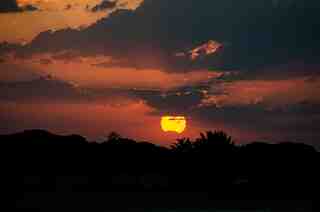
The sun is around 400 times larger than the moon, yet it also lies almost exactly 400 times farther away. This extraordinary coincidence allows the moon, at just the right moment and angle, to completely cover the sun’s bright surface. When this alignment occurs, the sun’s corona becomes visible, appearing as a soft, luminous halo around the dark disc of the moon. As the moon moves fully in front of the sun, the amount of direct sunlight reaching the Earth drops sharply. This reduction in light causes daytime conditions to change quickly: temperatures fall slightly, colours appear muted, and shadows soften as the sun’s brightness is replaced by the glow of the surrounding sky. Because the sun is briefly blocked, brighter stars and planets can become visible, and the sky takes on the appearance of dusk.
How Rare is a Total Solar Eclipse?
Although total solar eclipses occur somewhere on Earth roughly every 18 months, witnessing one from a specific location is far less common. The path of totality, the narrow band where the moon fully obscures the sun, is rarely more than 200 kilometres wide, meaning most places lie outside it. As a result, any given location can expect a total solar eclipse only once every 375 years on average. On 12 August 2026, parts of Spain fall within this path, with totality lasting for up to two minutes, making it a rare event that rewards careful planning.
What is the 2026 Eclipse Path?
As the National Solar Observatory explains, the 2026 eclipse follows a wide northern route across the globe. The moon’s shadow begins in the Russian Arctic, passes over Greenland and Iceland, then crosses the Atlantic before reaching northern Spain. From there, it continues across the Balearic Islands and fades out over the Mediterranean Sea. This alignment places both parts of mainland Spain and the Balearics within the narrow path where the sun will be fully obscured, allowing totality to be experienced from land as well as from the sea. Portugal lies just outside this path, but will still see a deep partial eclipse, with more than 90% of the sun covered, sufficient to produce a clear change in daylight conditions, even without full darkness.
The Rise of Astro-Tourism

In recent years, travel has increasingly been shaped by a desire for experiences that are rare, time‑specific and rooted in the natural world, rather than fixed itineraries or conventional sightseeing. This shift has brought astronomy into sharper focus, with more travellers planning journeys around celestial events such as meteor showers, dark‑sky stargazing and solar eclipses.
Travel industry commentators have linked the growth of astro‑tourism to a wider change in how people want to travel. According to Jessica Aspin of Travel Counsellors , “after years of screen time and city breaks, there’s a growing appetite for slower, more mindful travel. Astro‑tourism taps into that beautifully. It’s about disconnecting from the digital noise and reconnecting with the rhythm of nature.” Events such as eclipses, which cannot be replicated or rescheduled, encourage travellers to plan well in advance and choose destinations based on astronomical timing rather than trend.
Total solar eclipses sit at the centre of this movement. They are brief and highly location‑specific, experienced fully only from within a narrow geographical path. For many travellers, the appeal lies as much in the preparation and anticipation as in the event itself.
Villa travel aligns naturally with this approach. Privacy, open space and uninterrupted views allow astronomical events to be experienced without crowds or time pressure.
Where to Stay with CV Villas?

Spain is one of the few places in Europe where the total solar eclipse of 12 August 2026 can be seen from land, but only within a narrow path that crosses selected parts of the country. Portions of northern mainland Spain and the Balearic Islands fall within this path, where the moon will fully obscure the sun for just over two minutes.
Experiencing totality from a private villa allows the event to be observed without crowds or fixed viewing points. From locations within the path, the change in daylight and the brief visibility of the sun’s outer atmosphere can be clearly seen, whether from a coastal setting or an inland location with open skies. Despite its short duration, the eclipse is likely to be the defining moment of the stay for those in the right place.
For guests seeking a quieter setting or a more relaxed way to experience the eclipse, Portugal offers a practical and appealing alternative to destinations within the path of totality. The Douro Valley, located closer to the path and offering wide, elevated landscapes, is particularly well suited for viewing the eclipse, with a deeper level of obscuration and clear, open skies enhancing the experience. Its vineyard-covered hills and low light pollution provide an atmospheric backdrop for observing the event unfold.
The Algarve, while farther from the path, still offers a dramatic partial eclipse and may appeal to those combining the event with coastal scenery and warmer southern conditions, though the level of obscuration will be slightly lower than in northern regions.
Planning Your Eclipse Stay

If you would like to experience the eclipse from the Iberian Peninsula, our villas in Spain and Portugal are well placed to do so. Our villa specialists are on hand to help you find the right location and the perfect villa for August 2026.
Here are a few suggestions to inspire your search:
- Spirit of Son Fuster - Boasting panoramic views over the Alaró twin mountains, Spirit of Son Fuster is an idyllic retreat in Alaró, Spain, perfectly secluded for large groups and multigenerational stays.
- Finca Tranquila - This stunning, tranquil oasis features lush gardens, a serene pool area, gym, sauna and incredible interior design - the perfect venue for a relaxed island escape.
- Suites Las Vistas with Pool - A calm and stylish retreat for two, with panoramic sea views and a private plunge pool overlooking the Mediterranean.
To find out more about our villas, make sure to speak with one of our villa specialists or make an enquiry today.
 Chat on Whatsapp